
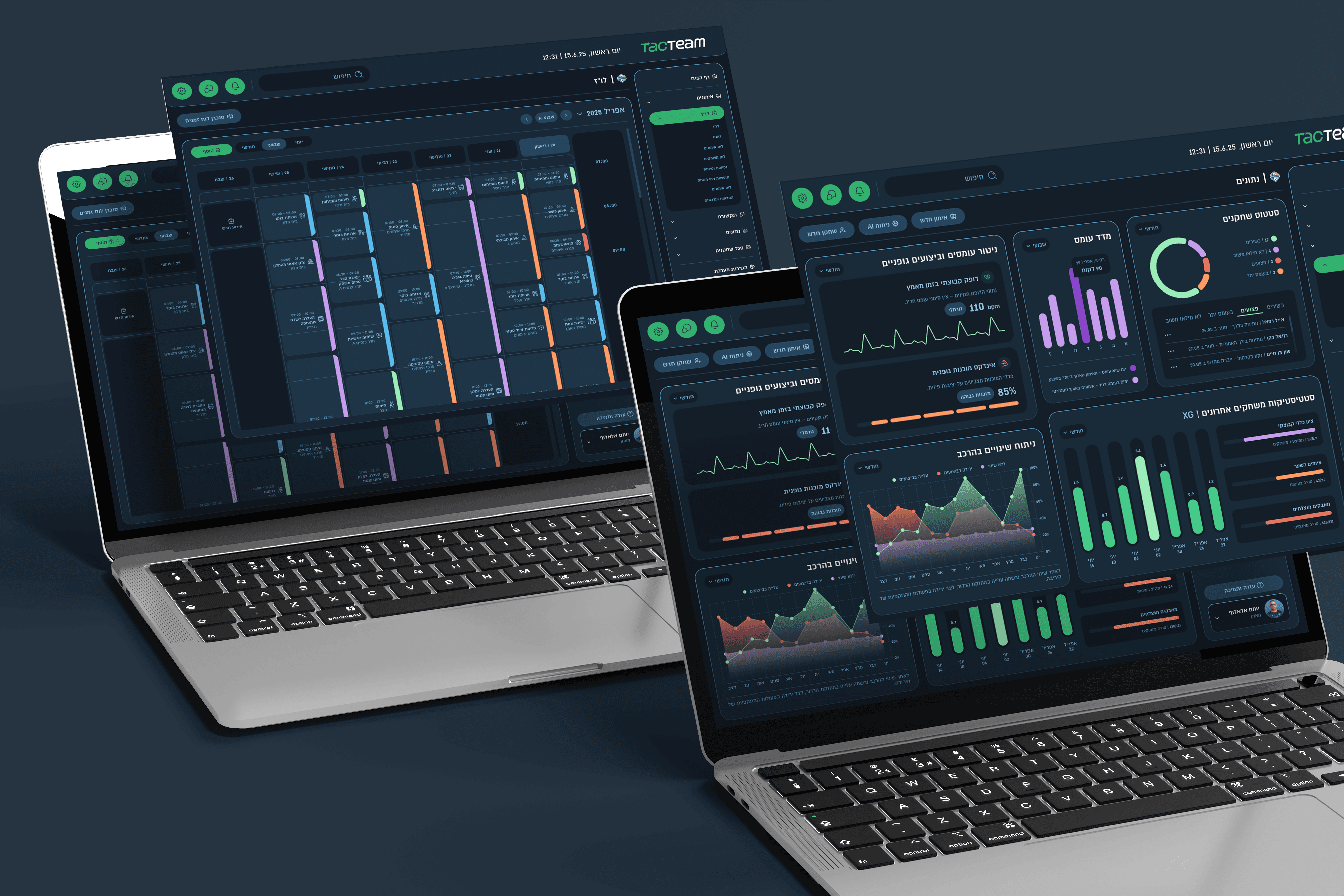
B2B Dashboard Case Study
TacTeam
Designing for the Unknown.
How do you build a complex management system for professional football clubs when you know nothing about the sport? You research, dissect, and unify the chaos into a single source of truth.
project role
UX/UI Designer
CORE OBJECTIVE
Full-Loop Fintech
From discovery to payment
Target Market
Social Groups
Events & Shared Wallets
Skills Demonstrated:
B2B SAAS
Complex Data
User Personas
Dashboard UI
UX
Information Architecture
Prototyping
Visual Identity
THE CORE CHALLENGE
A Fragmented Ecosystem.
Professional football clubs run on data, but operations are highly fragmented. The coaching staff, analysts, and logistics team operate in isolated environments, creating massive blind spots and miscommunication.
Data Dependency
Users reported being completely dependent on others for data retrieval. An analyst relies on the medical team for fitness data, slowing down tactical decisions.
Untrackable Assignments
Staff expressed severe difficulty tracking assignments. Managing daily tasks across emails, clipboards, and disparate apps leads to critical operational failures.
UX Research & Discovery
Decoding the Ecosystem.
To design a system that offers comprehensive control, I mapped the operational lifecycle and identified three core usability principles to guide the product.
Efficiency
Increasing the speed and efficiency of daily club processes.
Independence
Allowing users to manage their specific tasks without constant external support.
Trackability
Providing clear oversight to monitor tasks and operational responsibilities.
Three Roles. One Source of Truth.
The research culminated in three distinct user personas. They all draw from the exact same database (Trainings, Games, Logistics, Contracts), but require entirely different dashboard views.
The Coach
Needs a high-level overview of team fitness, upcoming match schedules, and tactical formations.
Needs
Quick access to player health
Training calendar management
Logistics Manager
Focused purely on operations: equipment, flights, hotels, and coordinating the physical movement of the team.
Needs
Inventory tracking
Operational scheduling
The Analyst
Requires deep-dive metrics, video clipping tools, and real-time performance tracking (KPIs/xG).
Needs
Video playback & annotation
Granular statistical graphs
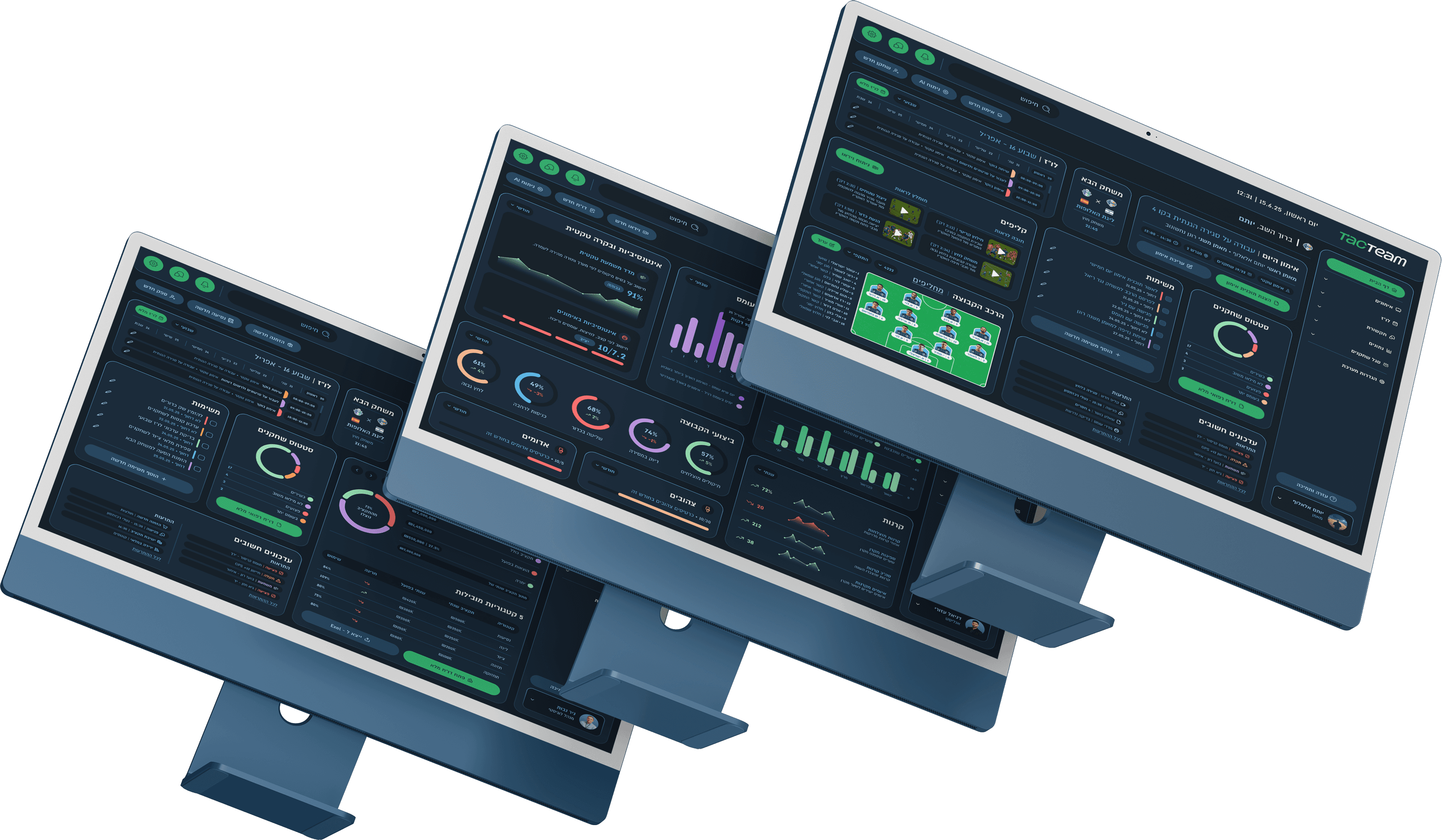
THE UI ARCHITECTURE
Modular & Independent.
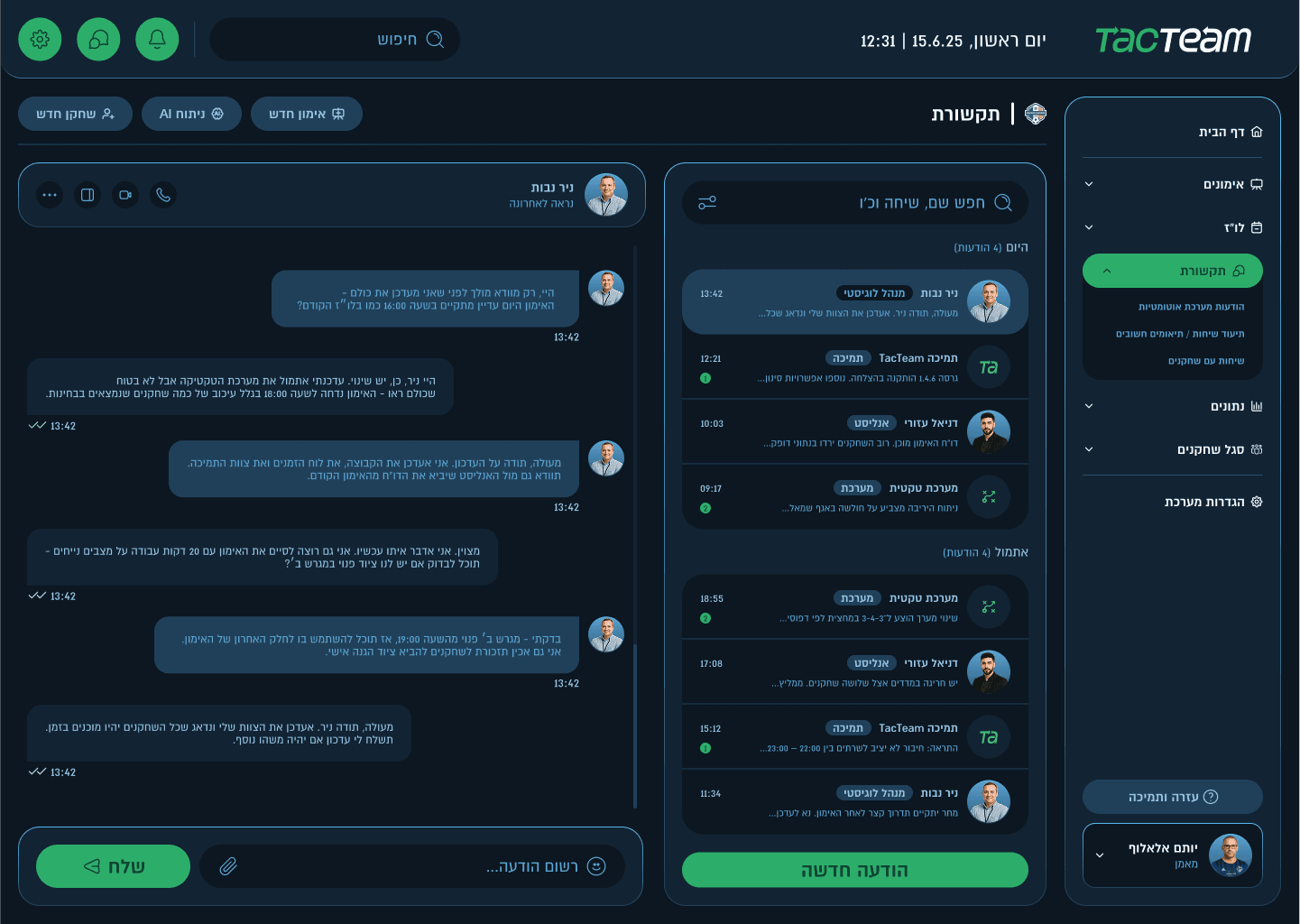
To deliver on the promise of Independence and Efficiency, I established a robust UI Kit featuring player arrangement grids, status chips, and modular toggles. This allowed the layout to adapt dynamically based on the logged-in user's role.
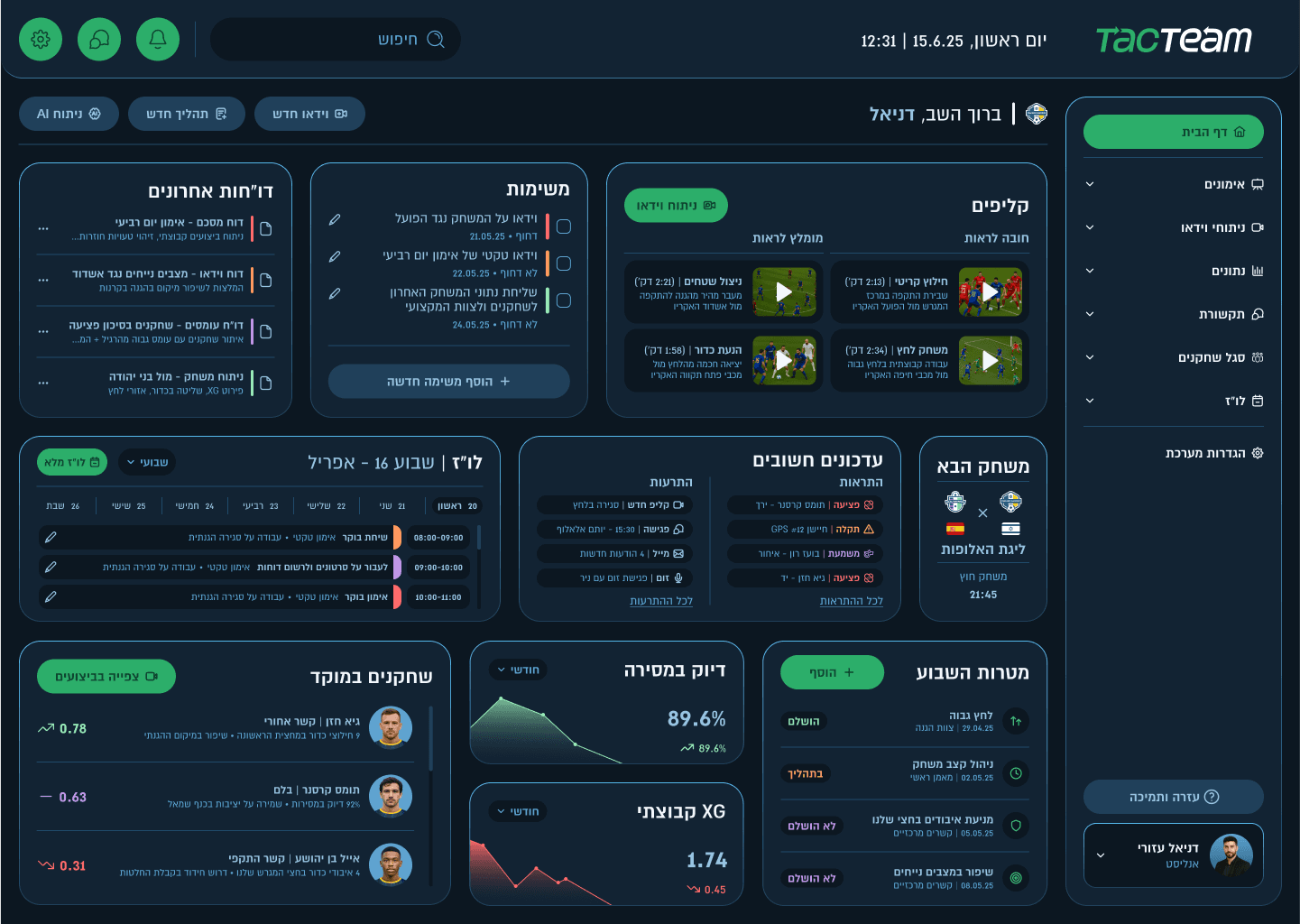
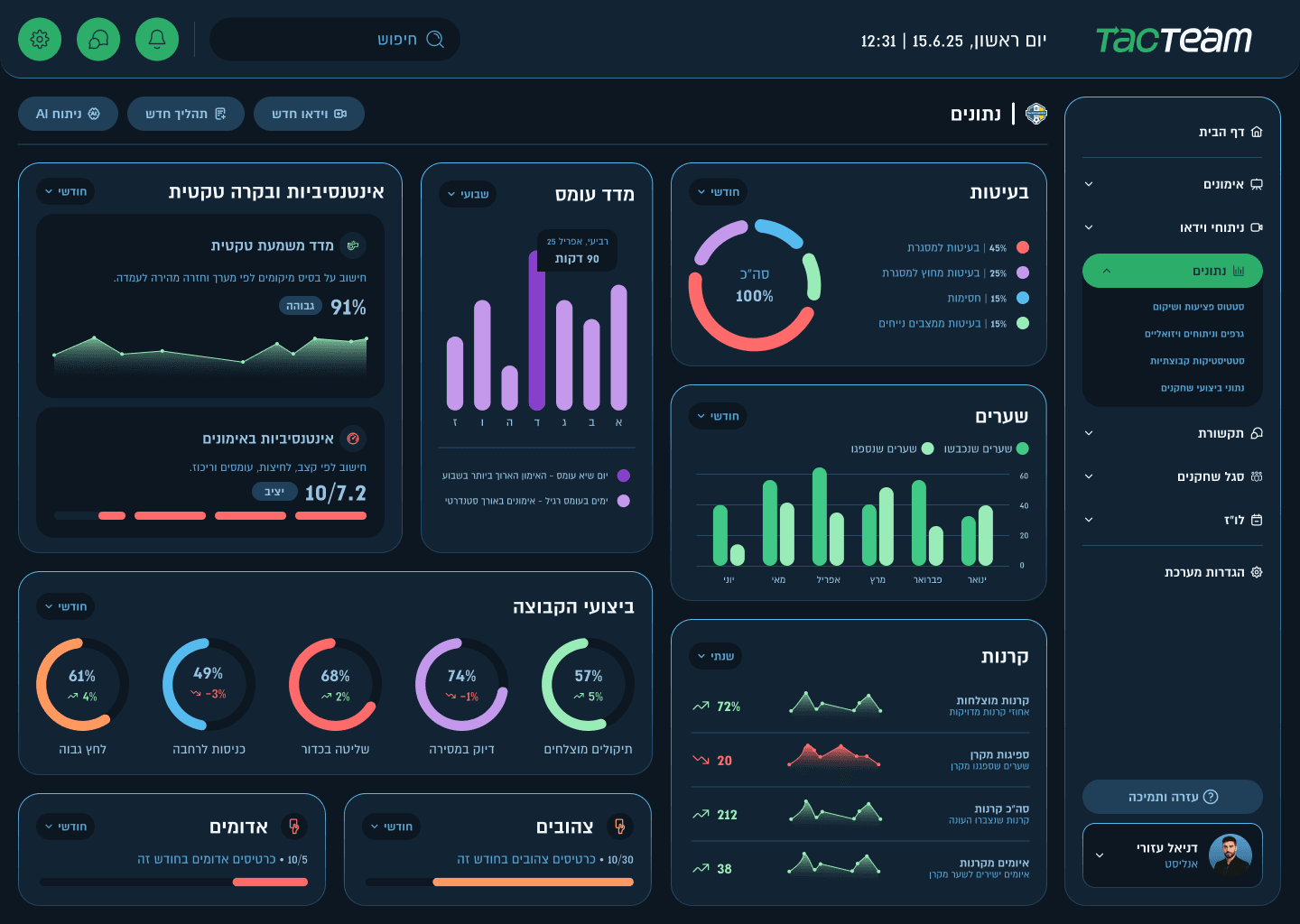
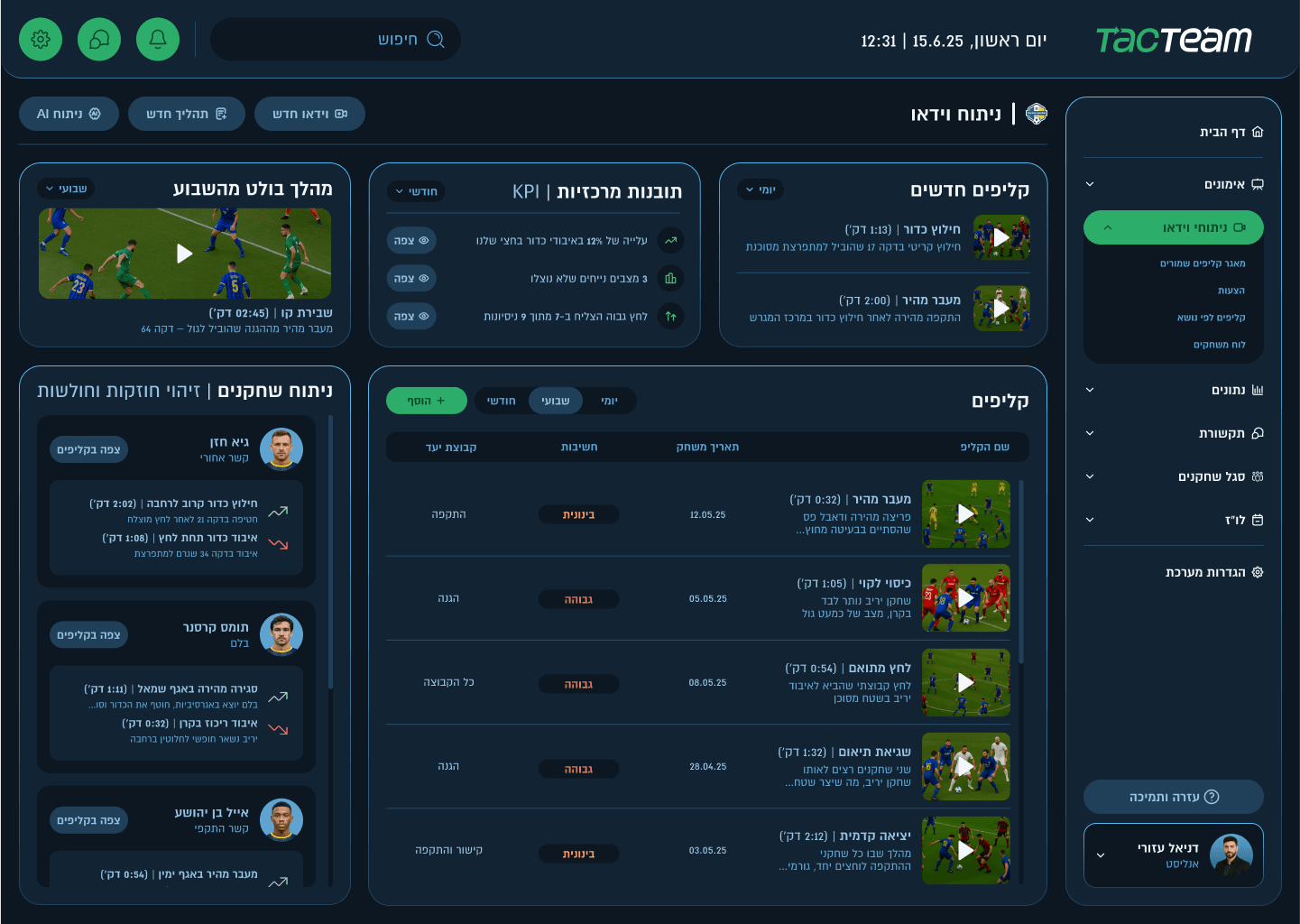
The Analyst View
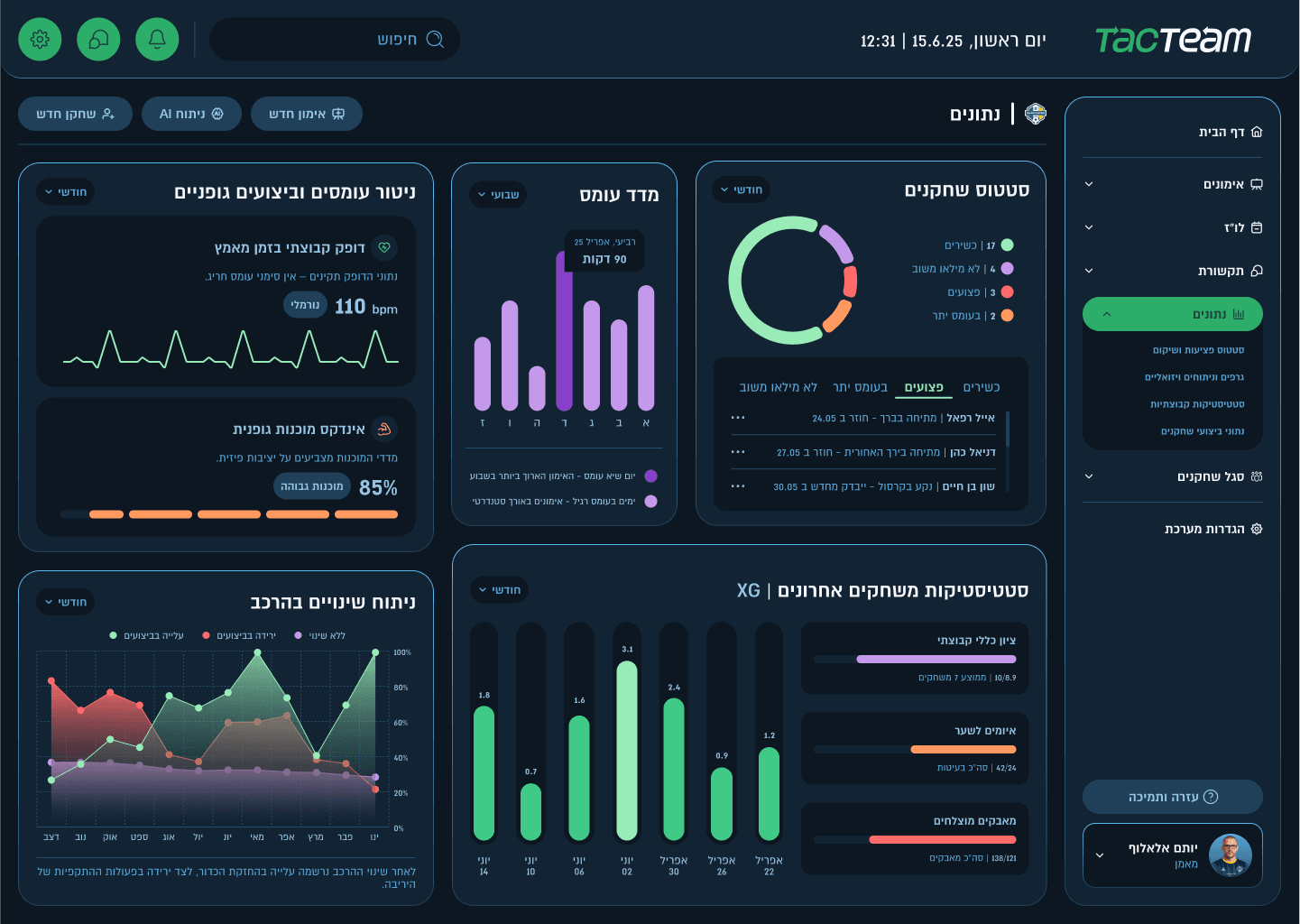
Built for data density. The interface prioritizes video analysis modules, real-time KPI tracking, and player-specific data tables without cluttering the screen.
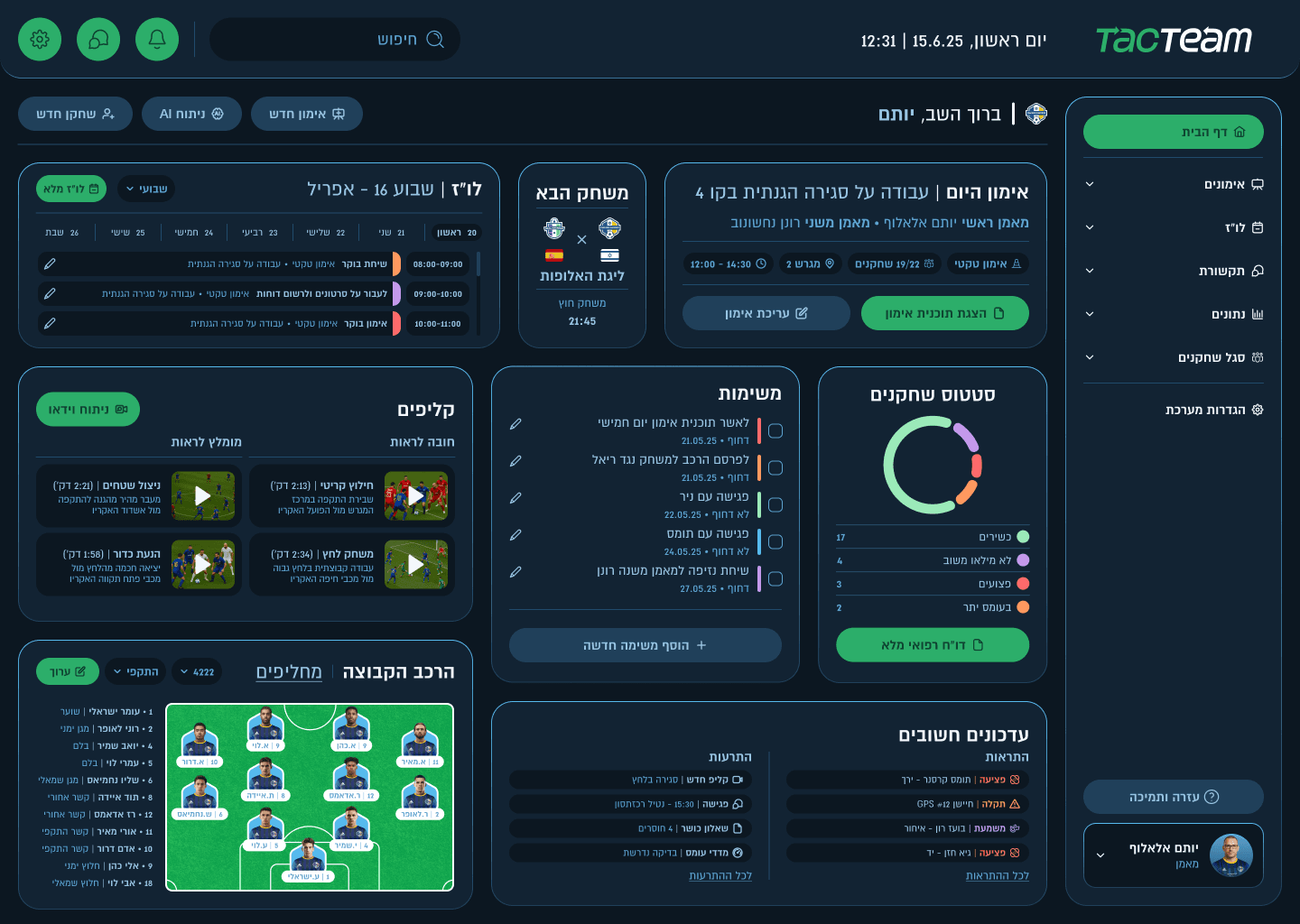
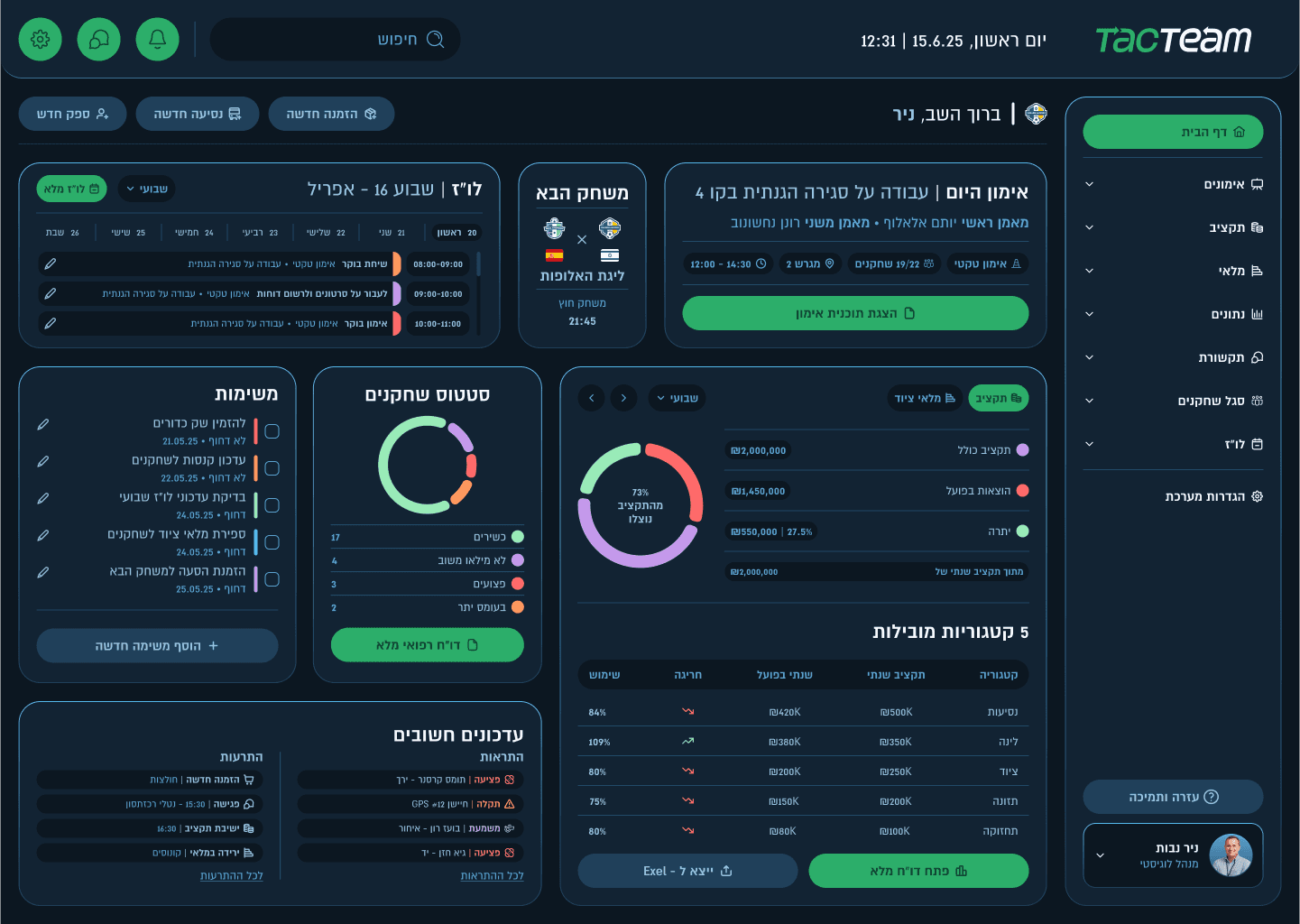
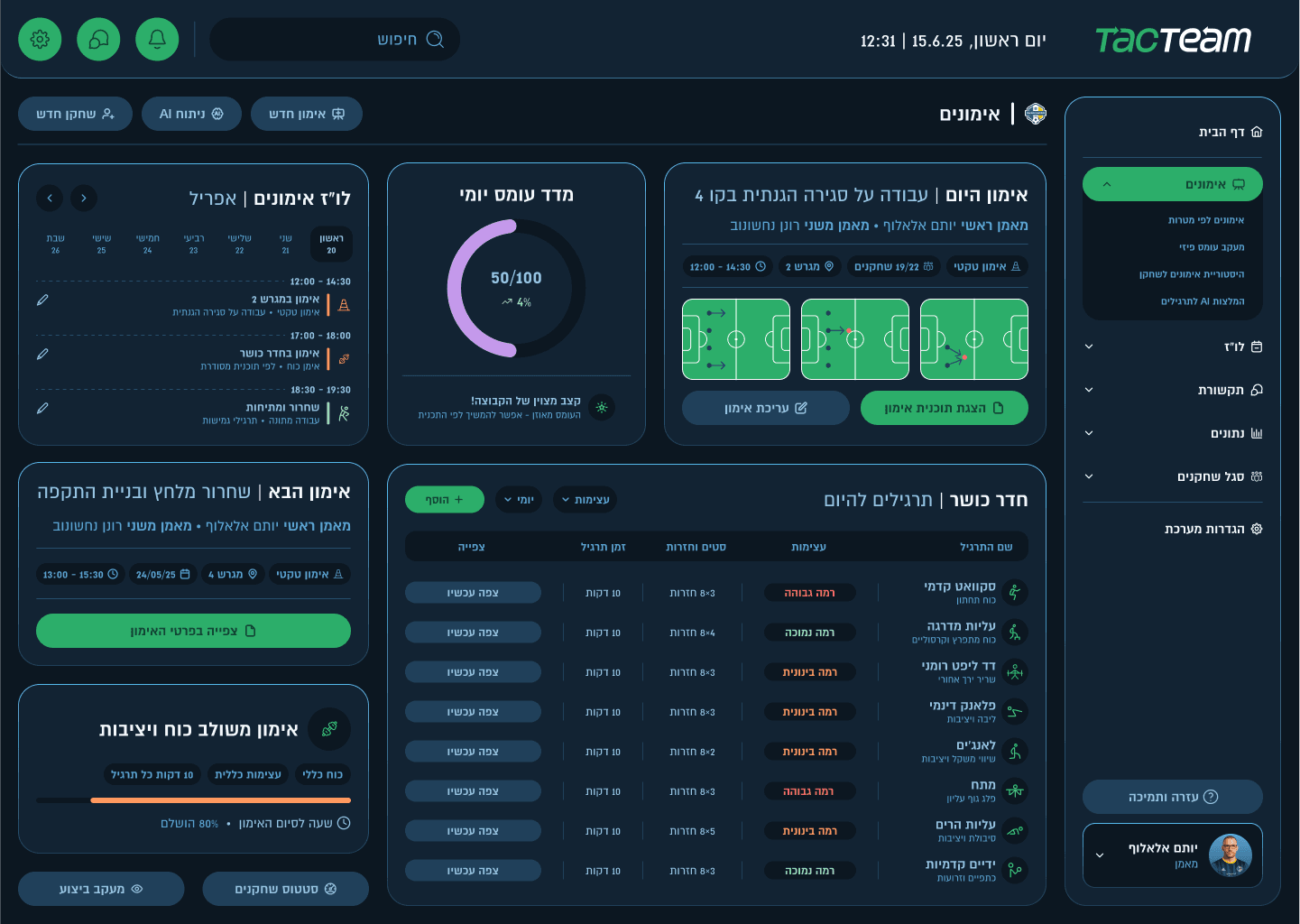
The Coach View
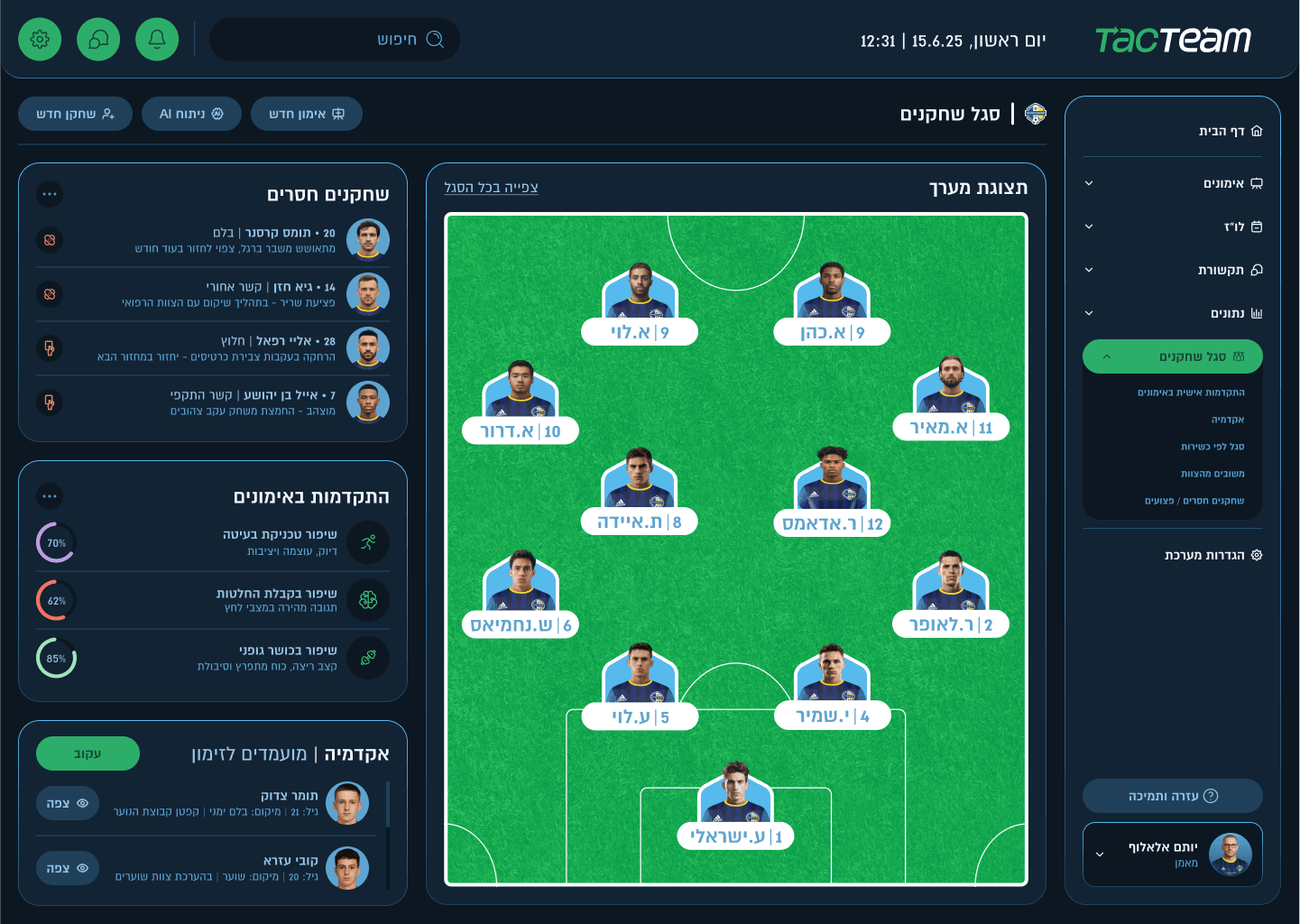
Designed for quick decision-making. The dashboard utilizes custom UI components (like the player arrangement grid) to surface tactical formations and critical alerts front and center.
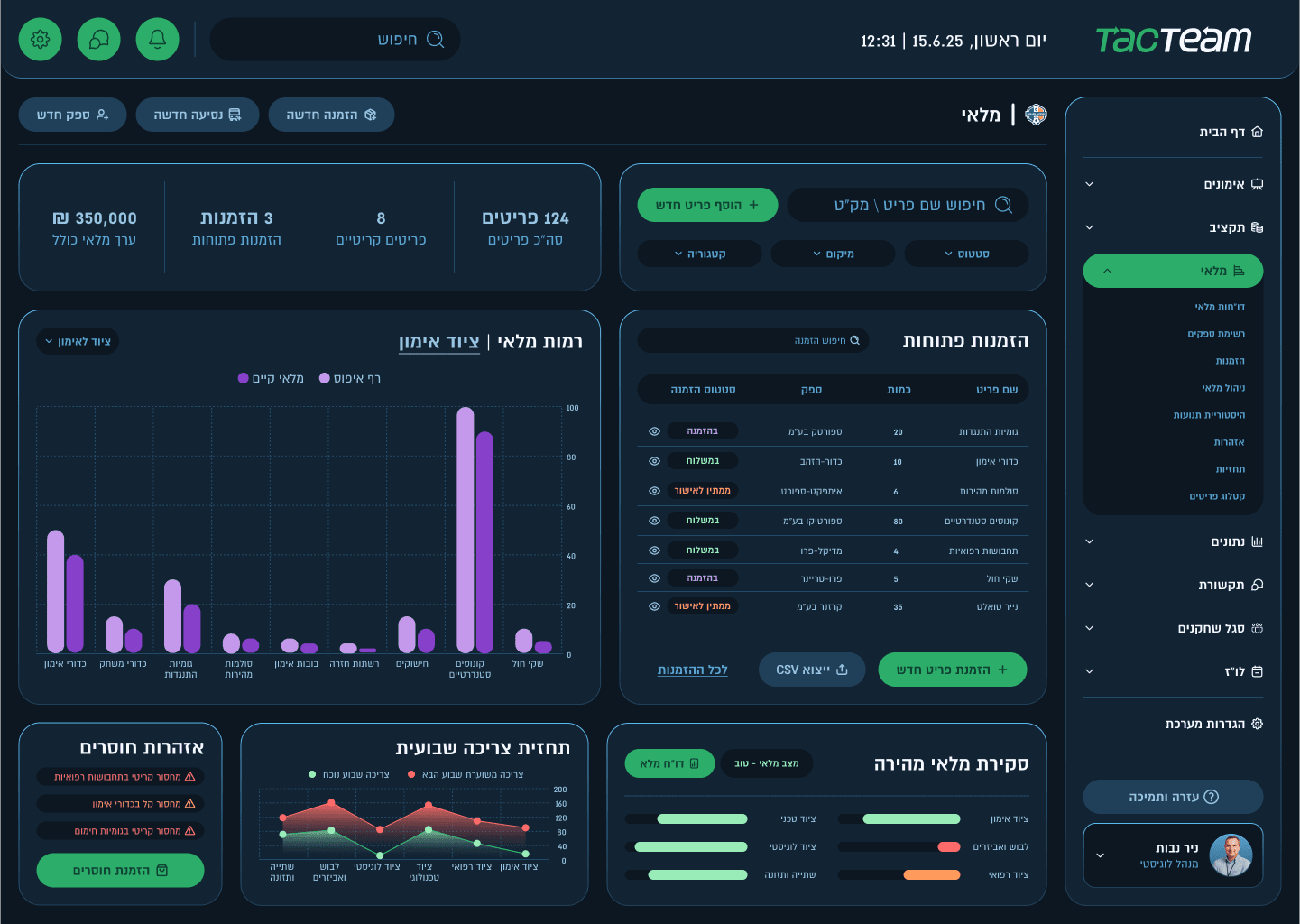
The Logistics View
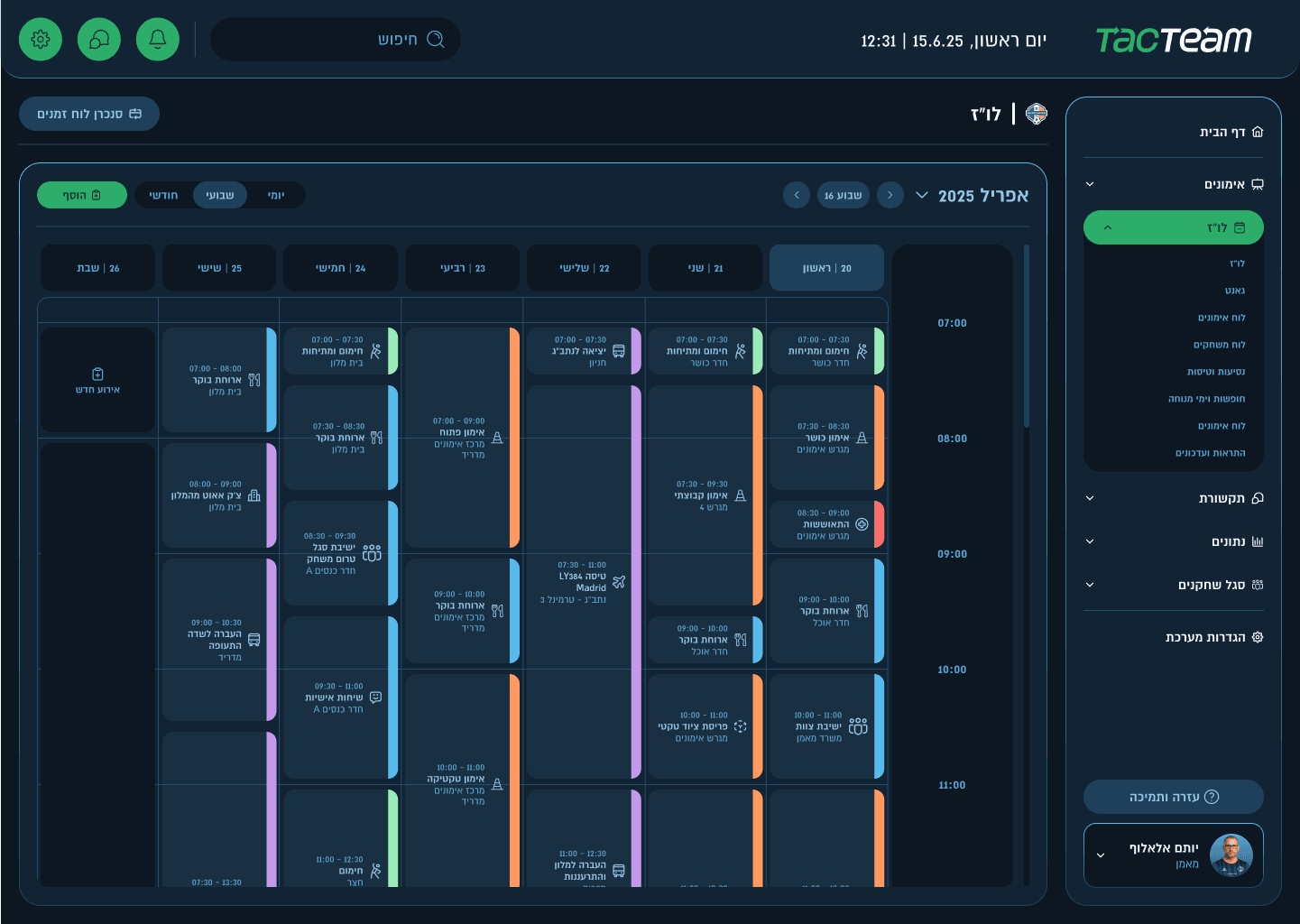
Stripped of tactical noise, this interface is a purely operational command center. It leverages status chips and toggles to track flight schedules, contracts, and equipment inventory efficiently.
VISUAL IDENTITY
The visual language was crafted to feel professional, athletic, and highly legible. A comprehensive UI kit was established (including layout grids, status chips, and typography hierarchy) built upon a distinct 6-color system.
COLORS
Symbol

Logo

TYPOGRAPHY
Adaptive Environments
POST SCRIPT
Key Takeaways
Taming Data Complexity:
Designing B2B dashboards is fundamentally an exercise in Information Architecture. The biggest challenge wasn't making it look good, but ensuring data density didn't become cognitive overload.
Designing for Experts:
Unlike B2C apps where users need constant guidance, football analysts and coaches are experts. I learned to prioritize efficiency, keyboard-ready layouts, and dense visual hierarchies over excessive whitespace.
The Power of Process:
Jumping into an unfamiliar domain proved that solid UX methodologies (research, mapping, and persona building) are universal tools that can solve any industry's problems.
What I Would Change
Dashboard Customization:
In a real-world scenario, every coach has their own methodology. Given more time, I would implement a "widget builder" allowing users to pin, resize, and rearrange their most vital KPIs.
Mobile Companion App:
While this heavy data lifting happens on a desktop, coaches on the pitch need a "lite" mobile/tablet version for real-time field use. This would be the next logical step in the product cycle.
Onboarding Flows:
Professional sports staff aren't always tech-savvy. I realized later that adding a guided, interactive onboarding flow for first-time users would significantly reduce the friction of adopting a new system.
The Result
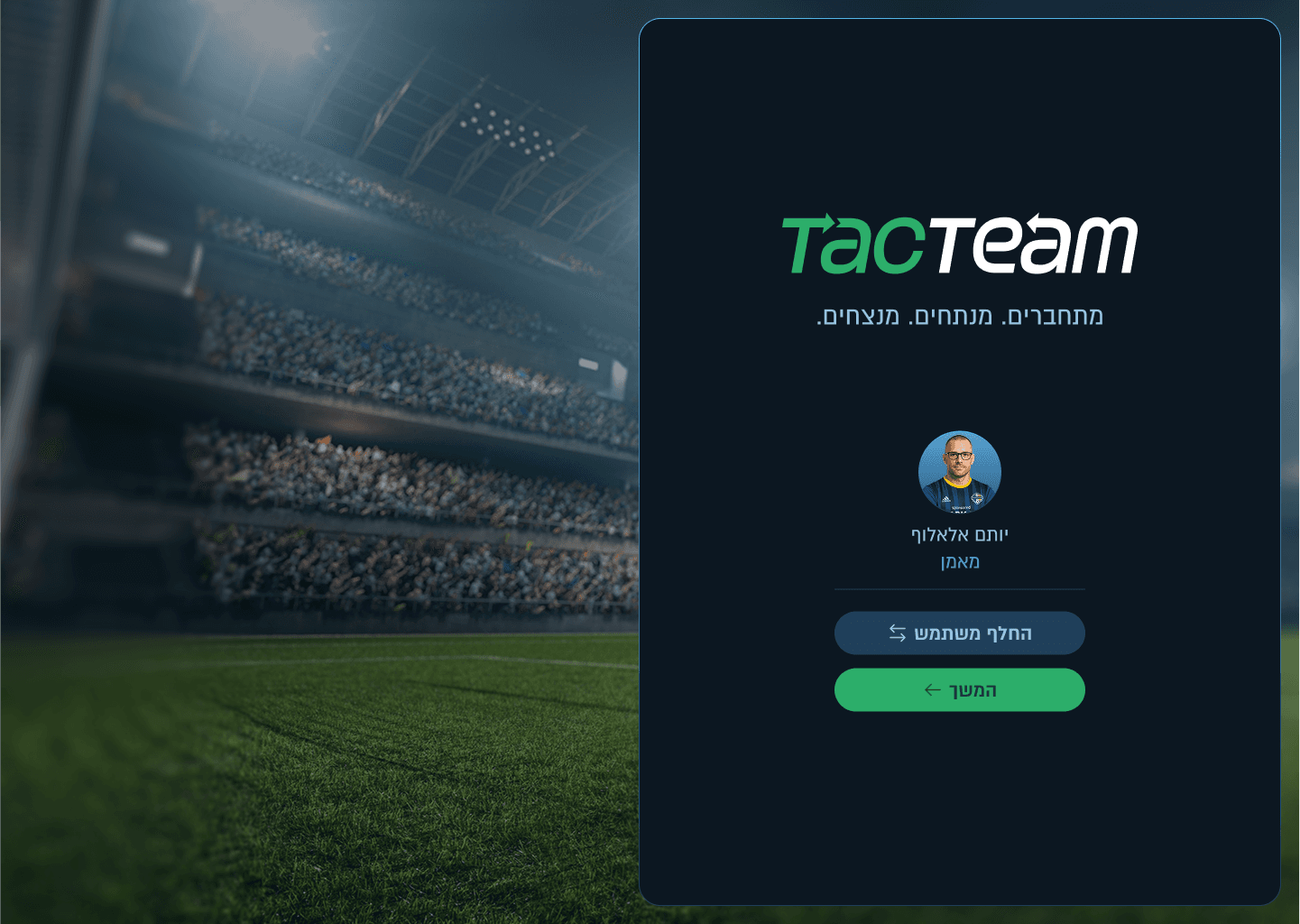
A comprehensive, multi-role B2B ecosystem designed for high-performance football management.
HANDS ON EXPERIENCE
Ready for the deep dive?
This case study only scratches the surface. View the complete Information Architecture, the extensive UI Kit, and all high-fidelity desktop screens on Behance.